PencilGo

Grade 1 · Reading · Literature

1st Grade Poetry Rhythm and Rhyme worksheets

6 printable versionsChallenge MeAbout 9 minutes eachFree · no account

When it’s done, scan the sheet with your phone and PencilGo marks it and picks the next one. Create a free account

★
Version
Print

Poetry Rhythm and Rhyme

Grade 1 Reading Worksheet - Challenge Me

NameDate

Circle the answer.

  1. Read: I see a kite in flight. It looks so bright. Which word in the poem rhymes with kite?

    • bright
    • see
    • looks
    • so
  2. Which word makes the poem rhyme? I see a kite in flight. It looks so ___.

    • bright
    • big
    • tall
    • pretty
  3. Which two words rhyme?

    • ball and bell
    • ball and tall
    • ball and bull
    • tall and bill
  4. Which word does NOT rhyme with cat?

    • hat
    • cut
    • mat
    • bat
  5. Clap the beats in "Row, row, row your boat". How many claps?

    • 4
    • 8
    • 6
    • 5
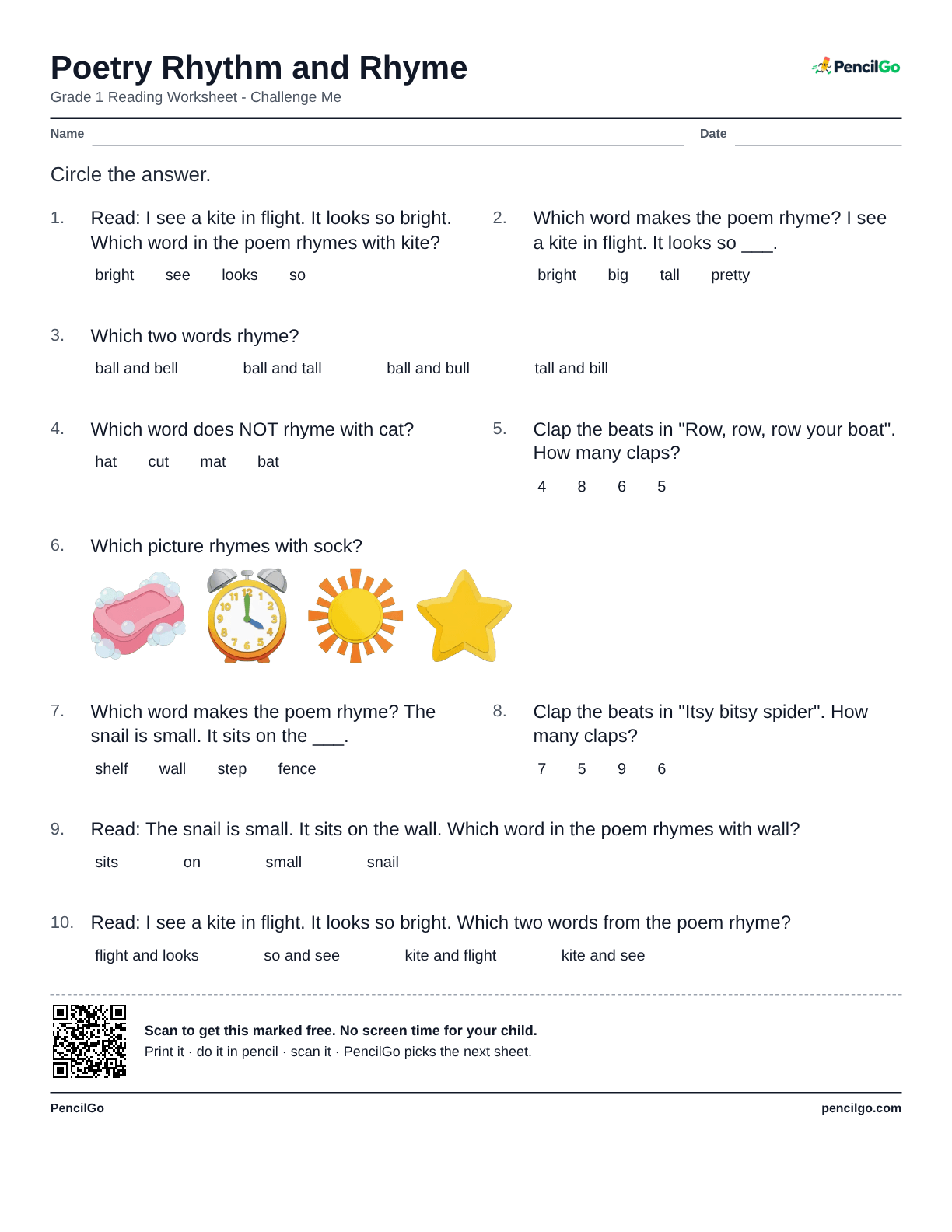
  6. Which picture rhymes with sock?

  7. Which word makes the poem rhyme? The snail is small. It sits on the ___.

    • shelf
    • wall
    • step
    • fence
  8. Clap the beats in "Itsy bitsy spider". How many claps?

    • 7
    • 5
    • 9
    • 6
  9. Read: The snail is small. It sits on the wall. Which word in the poem rhymes with wall?

    • sits
    • on
    • small
    • snail
  10. Read: I see a kite in flight. It looks so bright. Which two words from the poem rhyme?

    • flight and looks
    • so and see
    • kite and flight
    • kite and see
PencilGopencilgo.com

1st Grade Poetry Rhythm and Rhyme worksheet 1 – printable PDF
Download PDF: 123456

About this worksheet

Poetry gives first graders a playful way to hear how language works. The literature standard asks children to identify words and phrases in stories or poems that suggest feelings or appeal to the senses. In early practice, rhyme, rhythm, and repeated sound are the most concrete places to begin. This worksheet uses short poem lines so children can listen for ending sounds, notice repeated beats, and connect sound choices to mood.

Support pages use obvious rhymes and short phrases to clap. Standard and challenge pages use longer poems and longer phrases. Children sometimes choose rhyming words by spelling rather than sound, or they focus only on meaning and miss the music of the line. Ask your child to read each line aloud twice: once for meaning and once for sound.

What your child will learn

  • Hear rhyming words
  • Notice rhythm and repeated sounds
  • Connect word choice to feeling
  • Read poem lines aloud carefully

Common Core standard: CCSS.ELA-LITERACY.RL.1.4

Worked example

Cat, hat, and mat rhyme because they end with the same spoken sound.

Common mistake

Choosing words that look alike but do not rhyme when spoken.

Helpful hint

Say the words aloud and listen to the ending sounds.

Questions parents ask

What is the most common mistake with poetry rhythm and rhyme?

Choosing words that look alike but do not rhyme when spoken.

How can I help my child with poetry rhythm and rhyme?

Say the words aloud and listen to the ending sounds.

Are these 1st grade reading worksheets free to print?

Yes. All 6 printable versions on this page are free to download and print, with no account needed.

Similar: Characters and Setting · Retell Stories With Key Details

More 1st grade literature

See all literature

Every sheet you scan goes into your child’s record: dated, marked and ready for the year-end portfolio. Homeschool records