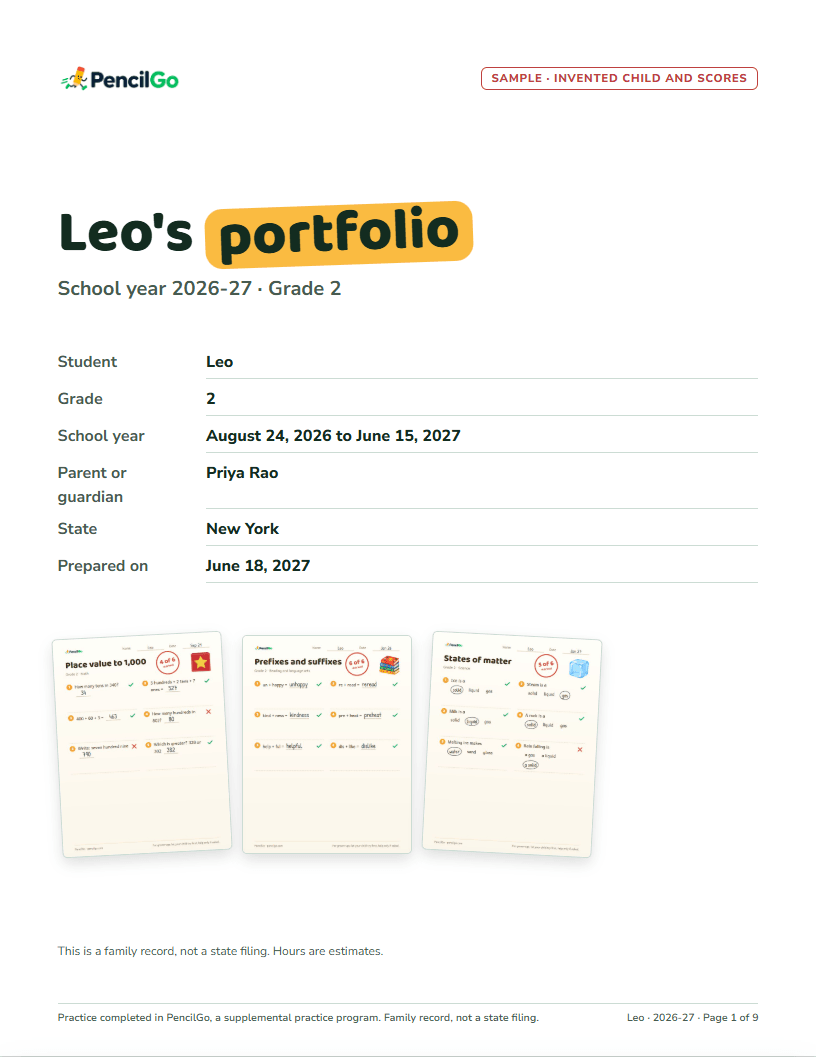
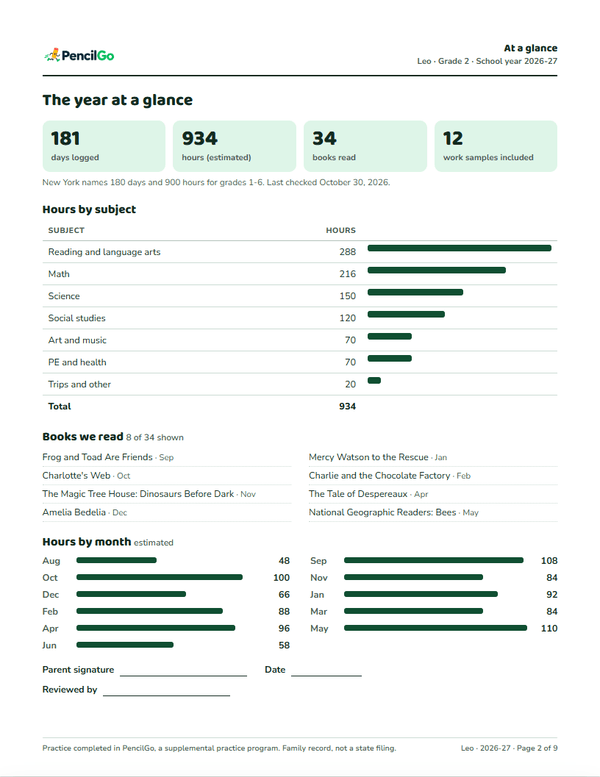
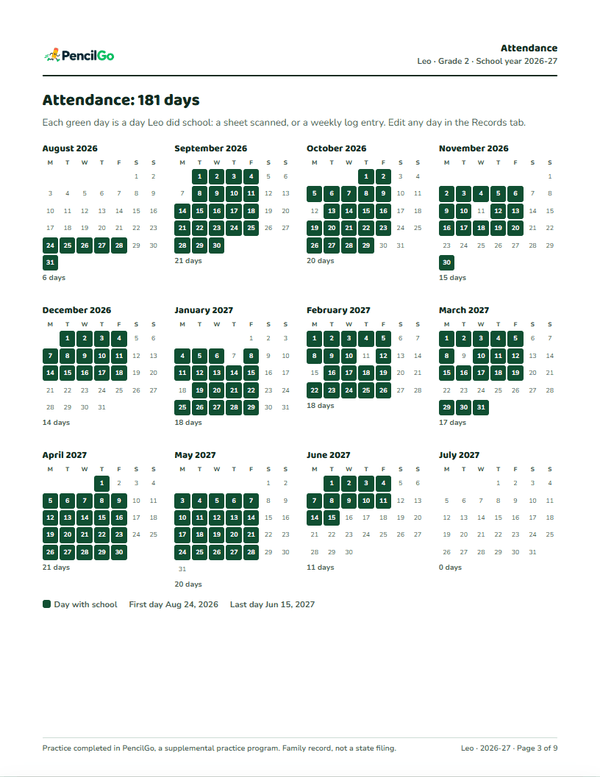
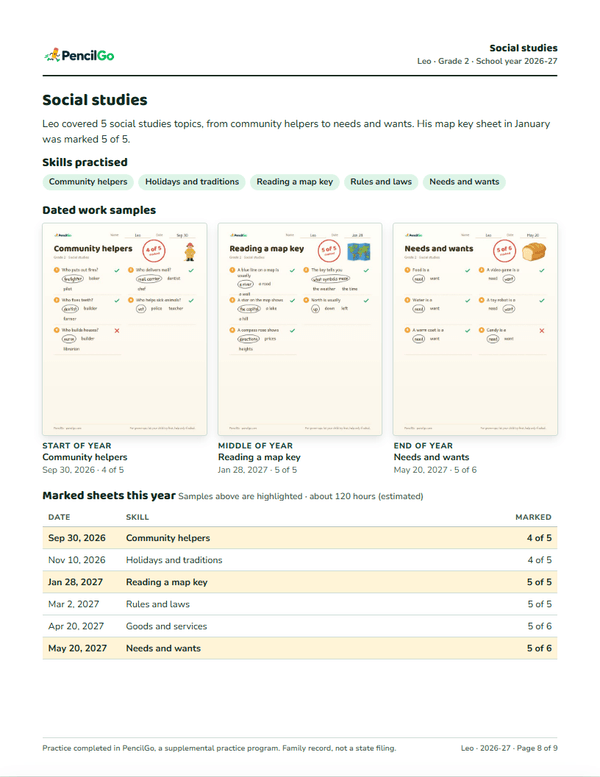
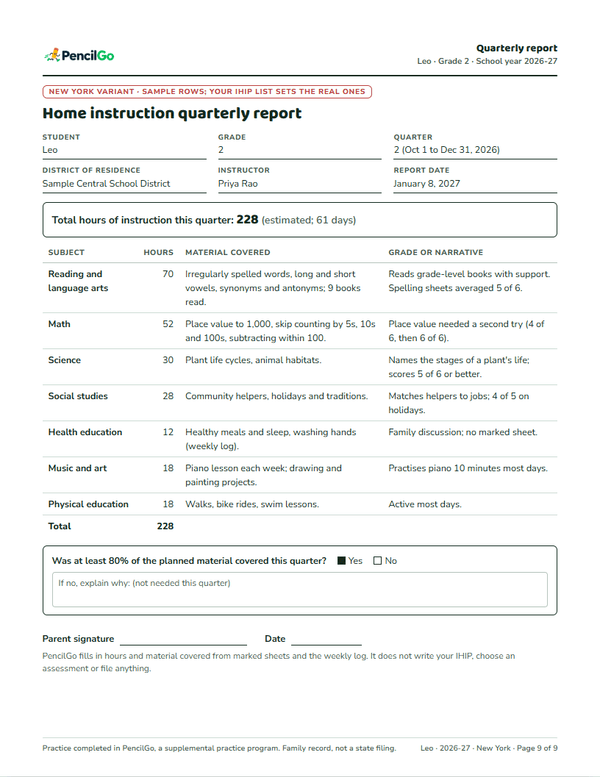
Here is what a year-end homeschool portfolio can look like for a grade 2 child: a cover, attendance, a reading list and dated work samples in every subject. Download the example, then make your own.
Updated for 2026-27 · Last checked October 30, 2026
The child, the scores and the school are invented. The worksheets are real PencilGo sheets.
Sample portfolio, 9 pages (invented child and scores)
The sample, page by page
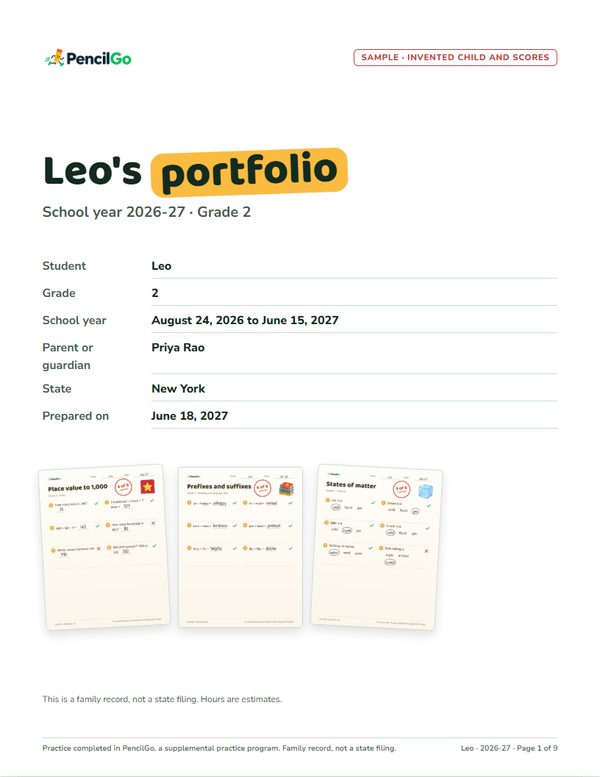
Page 1: cover
Page 2: the year at a glance
Page 3: attendance calendar
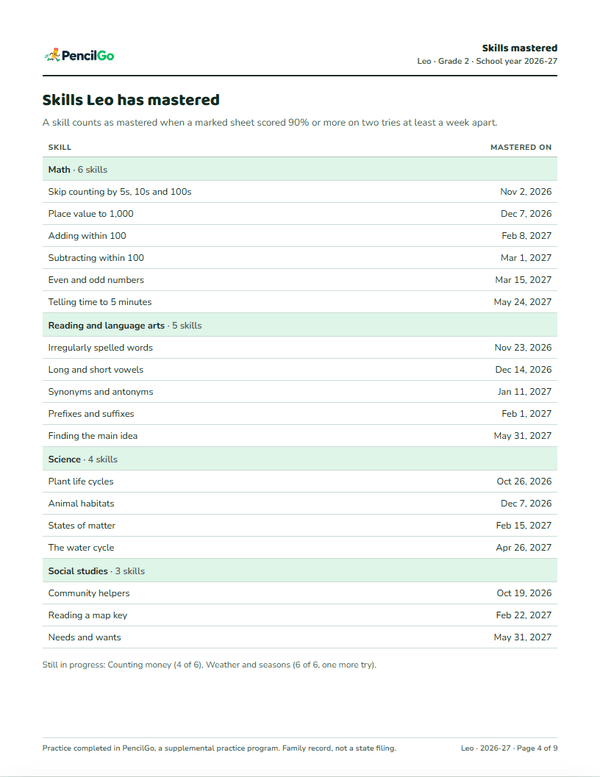
Page 4: skills mastered
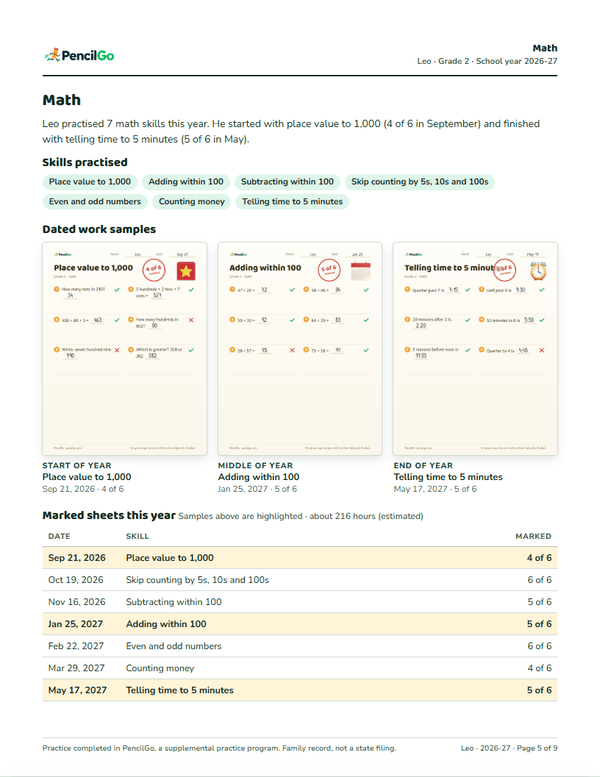
Page 5: math, with three dated samples
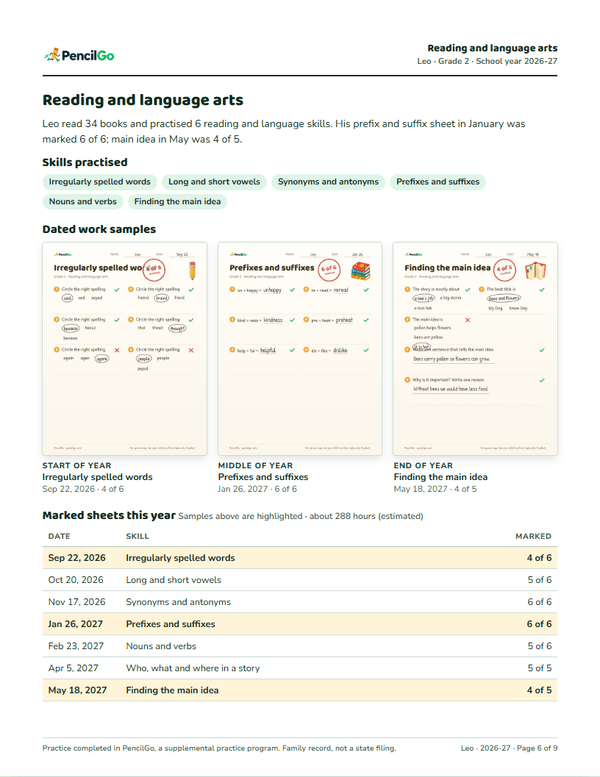
Page 6: reading and language arts
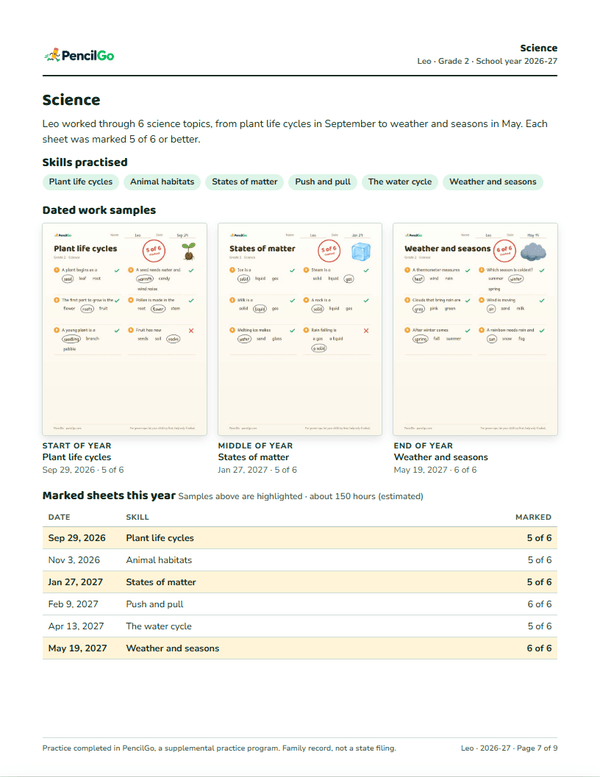
Page 7: science
Page 8: social studies
Page 9: a New York quarterly report
Pages 5 to 8 each show three dated, scanned worksheets: one from early in the year, one from the middle and one from late in the year, with the mark each earned. Page 9 is a New York quarterly report built from the same invented year.
The worksheets behind the samples
Every work sample in the sample portfolio is a real PencilGo worksheet, scanned and marked. You can print the same sheets for free:
It depends who is reading. An evaluator or district usually wants to see the subjects you covered, dates, a few samples over time and a total. Some states name more: Pennsylvania’s statute asks for a reading list by title and test results in certain grades, and Florida’s asks for a log made at the time of instruction. Ask your evaluator what they prefer before you build the packet. A short, ordered packet is easier to read than every worksheet. For each state we have checked, the state page lists what its law names.
How many samples?
About three per subject: start, middle and end of the year. That is common advice, not a rule, and your evaluator’s preference wins. Pick pages with a date, a name and a mark, and include at least one that shows your child working through something hard.
Portfolio versus transcript
A transcript lists courses, credits and grades, and it is mostly a high school document. For kindergarten to grade 5, a portfolio of dated work, with attendance and a reading list, is the record families keep. You do not need a transcript at this age.
Skip the ticking
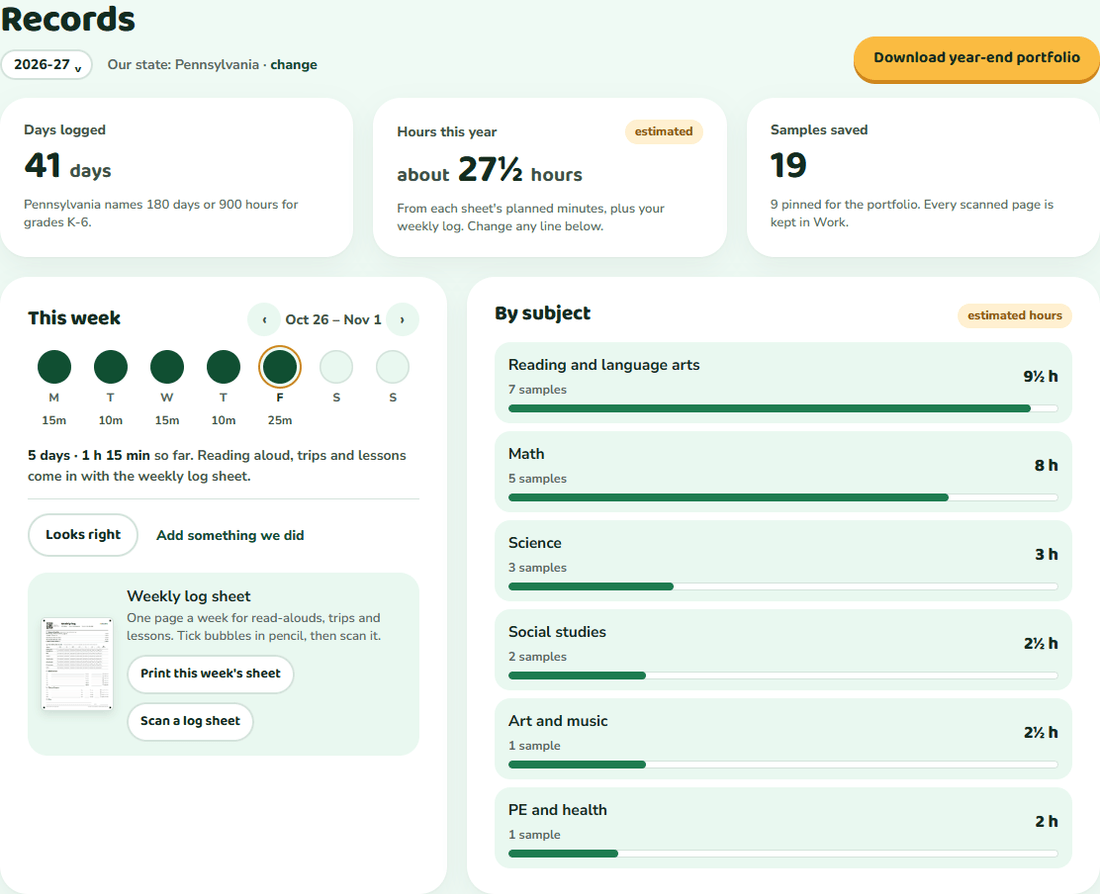
Start your child’s record today. Print a sheet, your child works in pencil, and you scan it. PencilGo adds the date, skill and mark to the record, and the weekly log sheet and attendance tracker cover the rest.
About five minutes a day for you. No screen time for your child.
A cover with your child’s name, grade and year, a count of days or hours, a reading list, and a few dated samples of work in each subject. Some states also ask for test results or an evaluator’s page. Look up what yours names. See what each state asks for.
How many work samples do I need?
Many families choose about three per subject: one from the start of the year, one from the middle and one from the end. That shows growth without a pile of paper. If your evaluator or district names a number, use theirs.
Does my state require a portfolio?
Some do. Of the states we have checked, Pennsylvania, Florida, Maryland and South Carolina describe a portfolio, and others ask for attendance, hours or an evaluation instead. Look up your state.
How do I organize a portfolio?
Sort by subject, then oldest to newest, with the date on every page. Put a cover and a one-page summary in front, and keep the attendance sheet and reading list behind them. The sample above is laid out that way.
Can I make one from scanned worksheets?
Yes. Each sheet you scan with PencilGo is saved with its date, skill and mark, and the year-end portfolio picks a few from the start, middle and end of the year for each subject. You can swap any of them.
Start your child’s record today
Print a sheet, your child works in pencil, and you scan it when it’s done. PencilGo marks it, picks the next sheet and keeps the record. Free, about five minutes a day, and your child never touches a screen.